Orders of $60+ ship free anywhere in the US, applied automatically at checkout.
How to Cook with Chili Oil.
I cook with Chili Oil every single day. How I fry, roast and finish with it so everything comes out golden and full of flavor.

Cook with chili oil two ways: as a cooking fat you fry things in, or as a finishing oil you drizzle over food just before serving. It adds smooth heat and a savory, aromatic depth, with no crunch, just flavor. Use it as your everyday cooking oil: sautéing vegetables, frying eggs, tossing noodles, pouring over soups, or whisking into dressings.
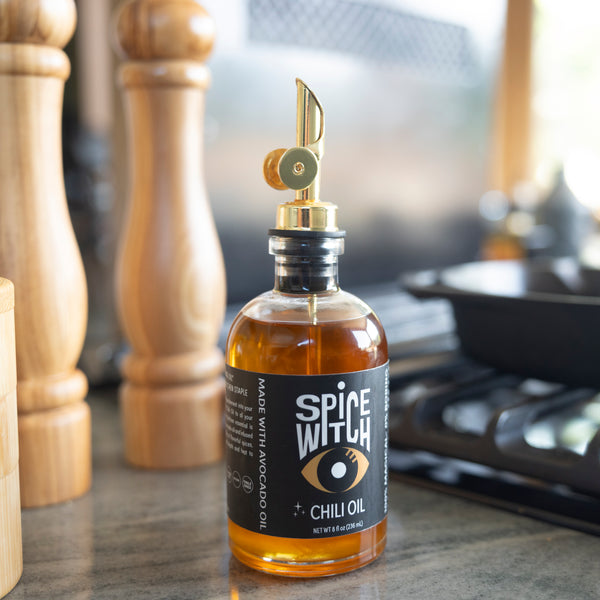
This guide uses our Chili Oil: made with avocado oil instead of seed oils, small-batch, Asheville, NC. It is a smooth, pourable oil, not a chili crisp.
Chili oil vs chili crisp: the quick distinction
Chili oil is smooth and pourable, all heat and flavor, no crunch. Chili crisp is chunky with fried aromatics. It adds texture as well as heat. If you want crunchy bits in your food, reach for the crisp. If you want clean, smooth heat as a cooking fat or finishing drizzle, reach for the oil. See the full chili crisp collection or the chili oil page.
How to use chili oil in cooking
As a cooking fat (frying & sautéing)
- Frying eggs: a tablespoon in the pan makes crispy-edged eggs with subtle heat. (For extra crunch on top, finish with chili crisp.)
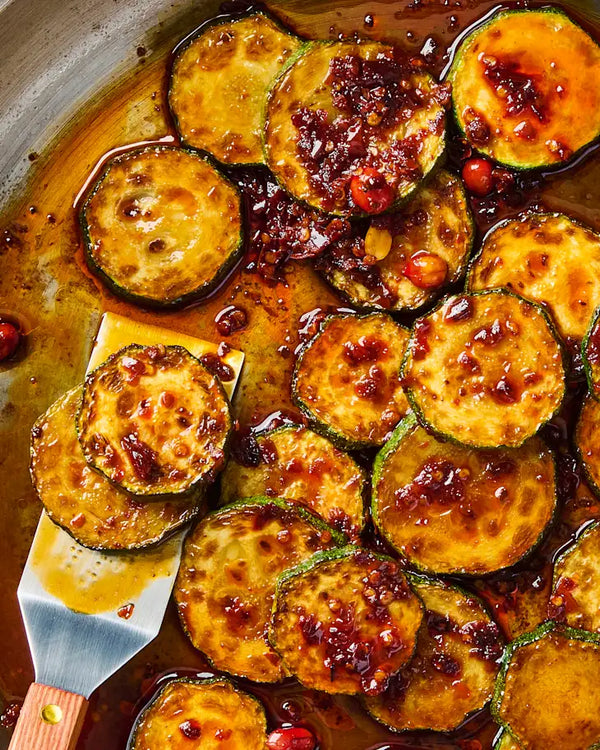
- Sautéing vegetables: start the pan with it to build heat before adding veg.
- Stir-fries: add at the start or finish to carry flavor through the whole dish.
- Pan sauces: deglaze with a little broth after using chili oil, and the heat carries into the sauce.
As a finishing oil (drizzle)
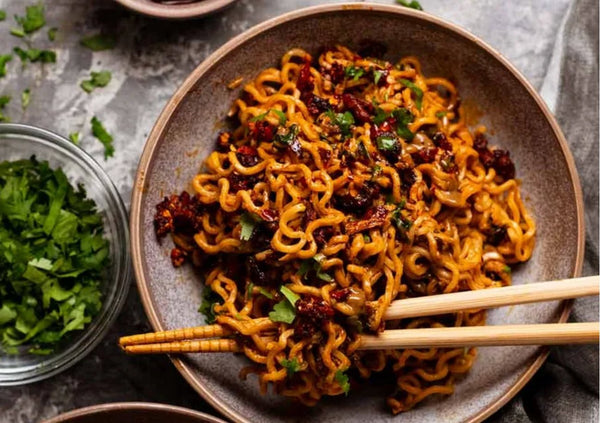
- Noodles: toss hot noodles with a tablespoon for fast flavor. See our full chili oil noodles recipe.
- Soups & ramen: swirl a teaspoon over the bowl just before eating.
- Dumplings & wontons: pour a little pool alongside as a dipping sauce.
- Roasted vegetables: drizzle over veg as they come out of the oven.
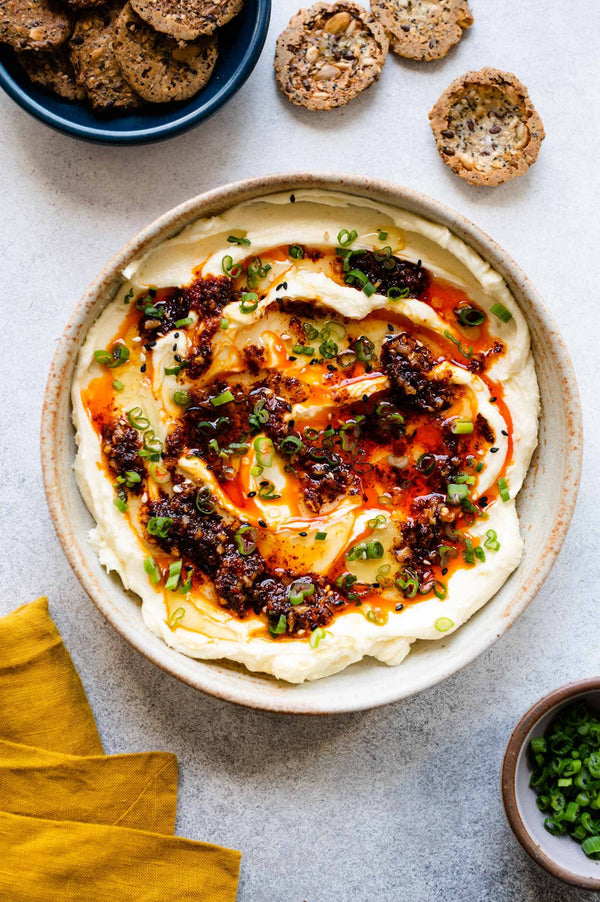
- Hummus & dips: finish the top of a hummus bowl for color and heat.
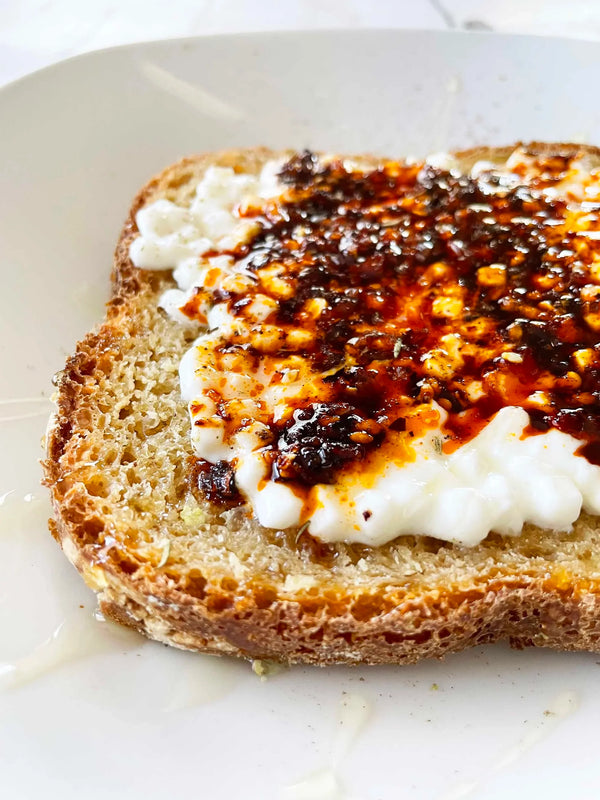
- Bruschetta & toast: drizzle over ricotta toast or grilled bread.
In sauces & dressings
- Whisk into vinaigrettes in place of or alongside neutral oil.
- Stir into peanut sauce, sesame noodle sauce, or tahini dressing for heat.
- Use as the base fat in a stir-fry sauce before adding soy sauce and vinegar.
In marinades
- Use as the oil component of a marinade for chicken, shrimp, tofu or fish, the heat infuses as it marinates.
How much chili oil to use
- Finishing drizzle over a bowl: 1–2 teaspoons
- Cooking fat for sautéing or frying: 1 tablespoon per serving
- Into a dressing or sauce: start with 1 teaspoon and taste up
Storing chili oil
Store at room temperature away from direct heat and light. Always replace the cap tightly. Refrigeration is optional but safe. It won't change the oil, just thicken it slightly. Let it come to room temperature before pouring if it thickens.
FAQ
Can you cook with chili oil?
Yes: use it as a cooking fat for frying and sautéing, or as a finishing drizzle over finished food. Use it as your everyday cooking oil whenever you want added heat.
What's the difference between chili oil and chili crisp?
Chili oil is smooth and pourable with no solid bits. Chili crisp has crunchy fried aromatics in it. Use oil when you want clean heat; use crisp when you want texture too.
Is Spice Witch chili oil made with seed oils?
No: it is made with avocado oil instead of seed oils. No canola and no soybean oil.
How do you use chili oil on noodles?
Toss hot cooked noodles with a tablespoon of chili oil, a splash of soy sauce, and a little sesame oil. Full recipe in our chili oil noodles guide.
Make it with
Spice Witch Chili Oil
Smooth, pourable heat on an avocado oil base. No seed oils. Small batch, made in Asheville, NC.
Shop Chili Oil